Circle Wins a Federal Bank Charter, Klarna Files for One and M-DAQ Buys Into Vietnam

Three stories from the past week show a clear pattern: fintechs are choosing to own their regulated infrastructure outright rather than lease it from partners. Circle secured a national trust bank charter for its stablecoin reserves. Klarna applied for its own US banking licence. And Singapore's M-DAQ Global picked up direct, regulated payment infrastructure in Vietnam. Here is what is happening, and why it matters for merchants, partners and financial institutions.
Circle Wins a Federal Trust Bank Charter for USDC

On 10 July, the Office of the Comptroller of the Currency granted Circle Internet Group final approval to establish Circle National Trust, formally chartered as First National Digital Currency Bank, N.A. Circle had submitted its application on 30 June 2025 and received conditional approval from the OCC in December 2025, so the final charter caps just over a year of regulatory engagement. As a nationally chartered trust bank, Circle National Trust will initially provide fiduciary digital asset custody services for Circle and its affiliates, with the company signalling plans to eventually extend custody to select institutional clients, including banks and other regulated financial firms, subject to further approval. Until now, the cash and short-term US Treasurys backing USDC, Circle's flagship stablecoin with a market capitalisation near 73 billion dollars, have been held by third-party banking partners; the new charter will let Circle bring that custody in-house under direct federal supervision for the first time.
Circle's shares rose as much as 14 percent in pre-market trading following the announcement. “OCC approval to establish Circle National Trust marks a defining step in bringing blockchain technology and digital assets into the core of the US financial system,” said Jeremy Allaire, Circle's co-founder, chairman and CEO. “Federal oversight of our trust bank sets a new standard for transparency, governance, and scale for Circle's infrastructure and unlocks a new phase of adoption, where leading financial institutions can build on public blockchains with clarity and confidence.” Circle joins a small cohort of crypto-native firms that have secured OCC trust charters or conditional approvals over the past year, including BitGo, Ripple, Paxos and Fidelity Digital Assets in December 2025, and Crypto.com in February 2026, with the OCC upgrading BitGo's approval to unconditional shortly after Circle's own news broke. Circle already holds licences across the US, UK, Singapore, Bermuda, Canada, Abu Dhabi and the EU under MiCA.
Why it matters: This is one of the clearest institutional validations yet of stablecoins as core financial infrastructure rather than a crypto-adjacent product. Federal trust bank status gives Circle a single, well-understood supervisory relationship that large institutions can underwrite against, rather than the patchwork of state money-transmitter licences that has historically governed stablecoin issuers. Expect Circle to move relatively quickly toward extending custody services to institutional clients now that it has direct regulatory cover to do so, and expect competing stablecoin issuers without a federal charter to feel growing pressure to pursue similar approvals.
The Debia angle: Circle's charter is a strong data point for a pattern Debia tracks closely across every market it operates in: regulatory infrastructure, secured early and thoroughly, becomes a genuine competitive advantage once institutional volume starts to matter. A federally supervised custody relationship is a meaningfully different value proposition to merchants and partners than a third-party arrangement, and Circle's timing, landing the charter just as USDC's institutional relevance keeps expanding, is a useful reminder that the payments providers worth building with are the ones investing in regulatory depth well before it becomes commercially urgent.
Klarna Applies for a US Banking Licence and FDIC Insurance
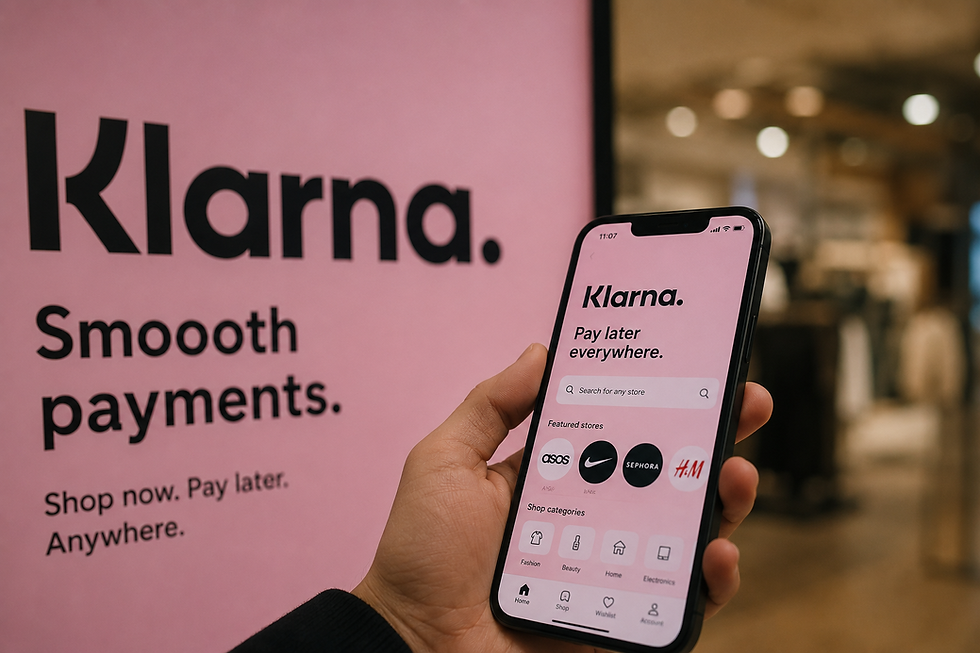
On 6 July, Klarna announced it had submitted applications to the Utah Department of Financial Institutions and the FDIC to establish Klarna Bank USA, a proposed Utah-chartered industrial bank that would operate as a wholly owned subsidiary of Klarna Inc. Klarna has operated as a licensed bank in Europe since 2017, but has served US customers since 2019 exclusively through partner banks. If approved, Klarna Bank USA would carry its own FDIC insurance, independent board, governance framework and internal controls, letting Klarna bring its US payments, savings, credit and merchant services in-house rather than routing them through sponsor institutions. Gary Harding, formerly chairman and CEO of Milestone Bank and president and CEO of Prime Alliance Bank, has been selected to lead Klarna Bank USA if the charter is granted.
The scale of Klarna's existing US footprint underlines the stakes: since 2019, the company says it has provided Americans access to more than 91.3 billion dollars in credit, saving customers over 5.1 billion dollars in interest compared with revolving credit card debt, and today serves roughly 30 million American users alongside hundreds of thousands of merchants. “Banking is built on trust,” said Klarna co-founder and CEO Sebastian Siemiatkowski. “We've seen firsthand the appetite for a fairer, more transparent approach in the US, and our own banking license is the natural next step, giving customers tools to borrow responsibly and build financial confidence, while bringing greater competition, innovation, and choice to consumers and merchants alike.” Klarna joins Affirm, PayPal and a lengthening list of fintechs pursuing direct US bank charters in 2026, part of a broader industry shift away from relying on sponsor banks and toward owning banking infrastructure outright.
Why it matters: A bank charter changes Klarna's underlying economics as much as its regulatory profile, removing dependence on partner bank margins and giving Klarna direct control over deposit-taking, underwriting and product design in its largest growth market. It also signals that even well-established fintechs with years of sponsor-bank relationships now see enough long-term value in owning the charter to go through a lengthy, uncertain approval process. Expect continued scrutiny from banking trade groups and consumer advocates, who have historically opposed non-bank charter applications, and expect the pace of fintech charter filings to keep accelerating through the rest of 2026.
The Debia angle: Klarna's move reflects a broader trend Debia sees reshaping fintech economics globally: companies that once happily rented regulated infrastructure from partners are increasingly deciding the long-term value of owning it outright outweighs the cost and complexity of getting there. For merchants and partners evaluating payment and lending relationships, the direction of travel matters. Providers building toward direct regulatory ownership, rather than indefinitely leaning on third-party sponsors, are generally signalling a more durable long-term commitment to the infrastructure they operate.
M-DAQ Acquires Regulated Payment Infrastructure in Vietnam

On 7 July, Singapore-headquartered M-DAQ Global, a fintech group specialising in foreign exchange and cross-border payment solutions, announced it had signed definitive agreements for a strategic integration with METech, the majority shareholder of PayME, a licensed payments service provider in Vietnam. The deal gives M-DAQ its own regulated payments infrastructure inside Vietnam for the first time, letting it process local collections and payouts directly in Vietnamese dong rather than relying on third-party partners. It brings M-DAQ's total regulated licence count to five across four key ASEAN markets, and marks the company's first direct operational presence in Vietnam, a market it had previously served only indirectly.
The timing reflects Vietnam's growing weight in regional trade. The country's digital economy reached approximately 72.1 billion dollars in 2025, accounting for more than 14 percent of GDP, with the government targeting 30 percent by 2030. “Vietnam is one of ASEAN's most dynamic growth markets and a key pillar for the region's digital transformation,” said Tan Choon Seng, Group CEO of M-DAQ Global. “We are proud to mark M-DAQ's first direct presence in the country through this integration, advancing our ASEAN-focused strategy. This positions us well to unlock new opportunities across the region, strengthen connectivity between markets, and drive the next phase of scalable cross-border payments.” METech founder Le Hoang Gia added that the integration lets METech, which has built a decade of presence in Vietnam's financial ecosystem, extend its local expertise to businesses operating beyond Vietnam through M-DAQ's regional network. The deal builds on M-DAQ's earlier ASEAN expansions, including its EasyPay platform, as part of a broader strategy to build what the company calls a unified ASEAN Payments Hub offering integrated collection, FX conversion and payout capabilities across the region.
Why it matters: This is a clean example of the same own-not-rent logic playing out at regional scale: rather than continuing to route Vietnamese transactions through third-party partners, M-DAQ has bought direct, licensed access to the market's payment rails. As Vietnam's digital economy continues its rapid growth trajectory toward the government's 2030 target, having regulated infrastructure already in place gives M-DAQ a meaningful head start over competitors still negotiating local partnerships. Expect more Singapore and regional fintechs to pursue similar direct-licensing strategies in Vietnam, Indonesia and the Philippines as ASEAN's cross-border payment corridors keep expanding in both volume and complexity.
The Debia angle: M-DAQ's Vietnam integration is a useful regional mirror of what Circle and Klarna are doing at global scale: securing direct, regulated infrastructure rather than depending indefinitely on third parties. For merchants and partners moving money across ASEAN's fast-growing but fragmented regulatory landscape, this pattern matters practically, not just strategically. Payment infrastructure providers who invest in owning licensed rails market by market, rather than stitching together indirect access, are the ones best positioned to offer merchants reliable, transparent settlement as the region's digital economy continues to scale. That is exactly the standard Debia holds itself to across the markets we serve.
At Debia, we track these changes because the future of payments will be shaped by speed, trust, interoperability, and smarter financial infrastructure. We do not just process payments. We understand the infrastructure, regulation, technology, and market shifts behind the future of digital commerce, and we build for where the ecosystem is heading next.



Comments